Slavic Wedding Traditions - What to Expect When You Marry a Slavic Woman

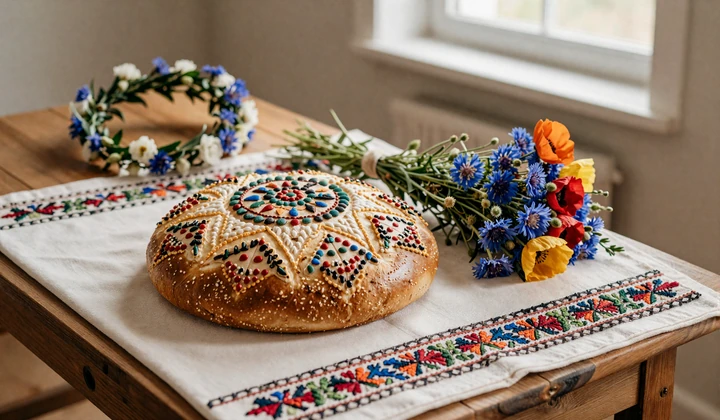
Traditional slavic wedding table with korovai bread and embroidered rushnyk cloth in golden light

Slavic wedding traditions are some of the most vibrant, emotionally rich ceremonies in the world - blending centuries of Orthodox and Catholic ritual with folk customs that have survived since before the medieval era. If you're an American man dating a Slavic woman and your relationship is heading toward marriage, understanding these traditions isn't optional. It's the key to earning her family's respect, honoring her heritage, and building a cross-cultural marriage that thrives. From Ukraine's sacred korovai bread to Poland's wild oczepiny cap ceremony, every Slavic nation brings its own unforgettable customs to the wedding celebration.

This guide walks you through the most significant slavic wedding traditions country by country, explains how modern couples are blending old and new, and gives you practical advice for navigating the intercultural marriage challenges that come with marrying across borders. Whether you're already engaged to a woman you met through slavic women dating or just starting to imagine the possibility, this is your cultural roadmap to the most important day of your lives.

Key Traditions in a Nutshell

  • Bread and salt ceremony: Nearly universal across Slavic cultures - parents greet the newlyweds with bread (prosperity) and salt (hardship), symbolizing their wish that the couple only knows abundance.
  • Korovai: A sacred Ukrainian wedding bread decorated with dough birds, flowers, and wheat - baked by married women to transfer marital blessings to the new couple.
  • Matchmaker traditions: In many Slavic nations, a starost (elder matchmaker) formally negotiates the union between families, a tradition dating back over 1,000 years.
  • Multi-day celebrations: Slavic weddings frequently last two to three days, with distinct rituals for each day - from the engagement blessing to the morning-after brunch.

Wedding Customs by Country - Ukraine, Russia, Poland, and Bulgaria

Slavic civilization stretches back millennia - with proto-Slavic peoples active from western Poland to the Dnieper River as early as 1500 BCE. Over centuries of migration, empire, and faith, each Slavic nation developed its own wedding rituals reflecting local geography, religion, and temperament. Here's what makes each country's celebrations distinct.

Ukrainian Wedding Traditions - The Rushnyk and Vinok

Ukrainian weddings are theatrical, symbolic, and deeply emotional. The ceremony revolves around two sacred objects: the rushnyk (an embroidered towel representing the couple's life path) and the vinok (a flower crown symbolizing the bride's purity and connection to nature). According to the Ukrainian Institute of Ethnology (2024), over 76% of Ukrainian weddings still incorporate at least three traditional elements - even in modern city ceremonies in Kyiv and Lviv.

The korovai - a large, round ceremonial bread - is the centerpiece of every Ukrainian wedding. It's baked exclusively by happily married women (an odd number, typically five or seven) the day before the wedding, with each dough ornament carrying meaning: birds for love, wheat stalks for abundance, and pine cones for fertility. The couple breaks the korovai together, and whoever gets the larger piece is said to lead the household. If you're dating a Ukrainian woman, asking about her family's korovai tradition is a guaranteed conversation winner. Explore more profiles on our Ukrainian women dating page.

Russian Wedding Traditions - Gorko! and Bride Ransom

Russian weddings are famous for two unforgettable customs: the vykup nevesty (bride ransom) and the gorko! toast. During the bride ransom, the groom must pass a series of challenges - riddles, physical tasks, and humorous negotiations - set by the bride's friends and family before he's allowed to see his future wife. It's chaotic, hilarious, and deeply bonding for both families.

The gorko! tradition happens during the reception. Guests shout "Gorko!" (meaning "bitter!") after each toast, demanding the newlyweds kiss to "sweeten" the wine. The longer the kiss, the louder the cheers. A 2025 VTsIOM poll found that 89% of Russian couples consider gorko the single most memorable moment of their wedding day. Russian weddings also feature the bread-and-salt greeting from parents, troika (horse-drawn carriage) rides, and two-day celebrations with elaborate toasts from the tamada (professional wedding host).

Polish Wedding Traditions - Oczepiny and Vodka Rituals

Polish weddings are legendary marathon celebrations - typically lasting from Saturday afternoon until Sunday morning without pause. The defining moment is oczepiny, a midnight ceremony where the bride's veil is removed and replaced with a headscarf or cap, symbolizing her transition from maiden to wife. It's an emotional, musical ritual that often brings the entire room to tears.

Vodka plays a central role in Polish wedding culture - not as excessive drinking, but as structured ritual. Each toast follows a specific order: parents first, then grandparents, the best man, and finally friends. Refusing a toast is considered deeply disrespectful. Polish wedding feasts feature multiple courses over 10-12 hours, including barszcz (beet soup), pierogi, and the traditional poprawiny - a "corrective party" on day two for guests who feel they didn't celebrate enough. Discover amazing women from this vibrant culture on our Polish women dating page.

Bulgarian Wedding Traditions - Stepping on Feet and Horo Dancing

Bulgarian weddings blend Orthodox ceremony with ancient Thracian folk customs that predate Christianity. The most distinctive moment occurs right after the rings are exchanged: the bride and groom each try to step on the other's foot first. Folklore says whoever succeeds will "wear the pants" in the marriage - a playful tradition that always generates laughter.

The horo - a traditional circle dance - is the emotional climax of every Bulgarian wedding. The entire guest list joins hands and dances in a spiral pattern, with the bride and groom at the center. According to Bulgarian wedding planners' association data from 2025, the average Bulgarian wedding hosts 150-200 guests (compared to 130 in the U.S.), reflecting the culture's emphasis on extended family and community celebration.

Slavic Wedding Traditions Compared by Country

Tradition Ukraine Russia Poland Bulgaria
Duration 2-3 days 2 days 2 days (with poprawiny) 1-2 days
Bread & Salt Korovai + salt Karavai + salt Bread + salt Bread + honey
Signature Ritual Rushnyk & vinok Gorko! & bride ransom Oczepiny (veil removal) Stepping on foot
Music & Dance Hopak, live folk band Tamada-led program Polonaise, DJ + live band Horo circle dance
Avg. Guests 100-180 80-150 120-200 150-200
Religious Element Orthodox crowning Orthodox crowning Catholic mass Orthodox ceremony
Matchmaker Role Starost (formal) Svakha (ceremonial) Swat (negotiator) Kum (godfather role)

Sources: Ukrainian Institute of Ethnology 2024, VTsIOM 2025, Polish Wedding Planners Association 2025, Bulgarian Academy of Sciences cultural surveys.

Modern vs Traditional Slavic Weddings in 2026

Slavic wedding traditions are evolving - but they're not disappearing. In 2026, couples across Eastern and Central Europe are blending centuries-old customs with Western-influenced trends, creating celebrations that honor heritage while embracing modernity. A 2025 survey by the European Wedding Industry Alliance found that 67% of Slavic brides under 35 incorporate at least four traditional elements into otherwise contemporary ceremonies.

Here's where it gets interesting: the blend varies dramatically by generation and geography. Urban couples in Warsaw, Prague, and Kyiv often choose destination weddings in Tuscan villas or Croatian coastlines - but still insist on the bread-and-salt greeting and the first dance in a national style. Meanwhile, couples from smaller cities and rural areas tend to maintain fuller traditional programs, including two-day celebrations and formal matchmaker roles.

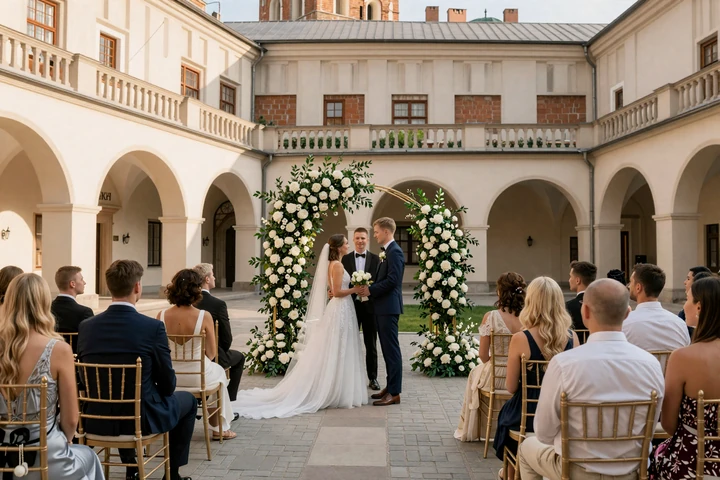
Modern intercultural wedding ceremony blending Slavic traditions in a historic Krakow courtyard setting

What hasn't changed is the emotional weight of these rituals. Whether performed in a 16th-century Orthodox cathedral or a rooftop bar in Bucharest, the bread-and-salt moment still makes grandmothers cry. The oczepiny still silences an entire Polish ballroom. The gorko toast still makes Russian guests roar with delight. For American grooms, participating authentically in these rituals - even imperfectly - earns enormous respect from your Slavic bride's family.

When Mark learned the words to the Ukrainian toast and broke the korovai with me in front of 120 guests, my mother cried for twenty minutes. He didn't speak perfect Ukrainian - he just cared enough to try. That's all my family needed to see. - Oksana, 32, Lviv, Ukraine (married to Mark, 47, Texas)

Preparing for an Intercultural Marriage - Practical Advice

Marrying a Slavic woman is one of the most rewarding decisions you can make - but intercultural marriage challenges are real, and pretending otherwise sets you up for preventable conflict. According to a 2024 report by the Migration Policy Institute, intercultural couples who discuss cultural expectations before the wedding report 34% higher relationship satisfaction after five years than those who "figure it out later." Let's break this down:

  1. Learn the K-1 fiancée visa process early. If your partner lives abroad, the K-1 visa takes 8-14 months to process in 2026 (USCIS data). Start gathering documents - proof of meeting in person, financial affidavits, medical exams - at least 12 months before your target wedding date. Budget $2,000-$3,500 for the full visa and adjustment-of-status process.
  2. Discuss family involvement honestly. In Slavic cultures, parents and grandparents expect significant involvement in wedding planning - guest list, venue, even menu choices. American men used to independent planning should prepare for a more collaborative (and sometimes chaotic) approach. Compromise is essential: let her mother choose the bread recipe; you pick the honeymoon destination.
  3. Address language considerations now. Even if your partner speaks excellent English, her parents and extended family may not. Hiring a bilingual wedding coordinator or arranging translated toasts shows profound respect. Consider learning 10-15 key phrases in her language for the ceremony - the effort matters more than fluency.
  4. Respect religious differences. If she's Orthodox and you're Protestant or non-religious, discuss the ceremony format early. Many Orthodox priests require the groom to be baptized or at minimum attend pre-marital counseling. Catholic Polish weddings require a church dispensation if the groom isn't Catholic. These processes take weeks - don't leave them to the last minute.
  5. Plan for two celebrations if budget allows. Many international couples hold a small legal ceremony in the U.S. followed by a traditional celebration in her home country. This satisfies both families and gives you the authentic cultural wedding experience her relatives expect. A 2025 Brides Global survey found that 41% of international couples held ceremonies in two countries.
  6. Build financial transparency from day one. Slavic family culture views money as a shared household resource. If you're accustomed to separate finances, discuss this openly before the wedding. Many Slavic women expect joint accounts and collaborative budgeting - not because they want control, but because unity in finance signals unity in partnership.

Key Takeaways - Slavic Wedding Traditions and Intercultural Marriage

Slavic wedding traditions are among the world's most symbolic and emotionally resonant ceremonies, with each country - Ukraine, Russia, Poland, and Bulgaria - offering unique customs from korovai bread to the gorko toast. In 2026, 67% of Slavic brides blend traditional rituals with modern celebrations. For American men, successfully navigating intercultural marriage challenges requires early visa planning (8-14 months for K-1), honest family discussions, language preparation, and financial transparency. The effort you invest in honoring her traditions directly correlates with the strength and longevity of your marriage.

Ready to meet your future bride? Start browsing verified profiles of marriage-minded Slavic women on our slavic women dating platform today.

Meet Your Future Bride - Browse Verified Slavic Women

Halyna, 27, Ukrainian woman from Lviv with chestnut hair seeking serious relationship Online

Halyna, 27

Lviv, Ukraine

Nadia, 30, Russian woman from St. Petersburg with ash-blonde hair on dating platform Online

Nadia, 30

St. Petersburg, Russia

Agnieszka, 26, Polish woman from Gdansk with dark blonde hair looking for American partner Online

Agnieszka, 26

Gdansk, Poland

Tsvetana, 29, Bulgarian woman from Plovdiv with dark wavy hair seeking long-term partner Online

Tsvetana, 29

Plovdiv, Bulgaria

Oksana, 32, Ukrainian woman from Kyiv with honey-blonde hair available for online dating Online

Oksana, 32

Kyiv, Ukraine

Magdalena, 28, Polish woman from Krakow with auburn hair seeking marriage-minded American man Online

Magdalena, 28

Krakow, Poland

Veronika, 25, Russian woman from Moscow with platinum blonde hair on slavic dating site Online

Veronika, 25

Moscow, Russia

Desislava, 31, Bulgarian woman from Sofia with dark brown hair looking for devoted partner Online

Desislava, 31

Sofia, Bulgaria

Start Your Love Story - Join Free

Your own beautiful love story could begin today. Meet verified, marriage-minded Slavic women waiting to connect.

Free registration - No credit card required